Carving Mount Rushmore: How the Black Hills Memorial Was Built (1927-1941)
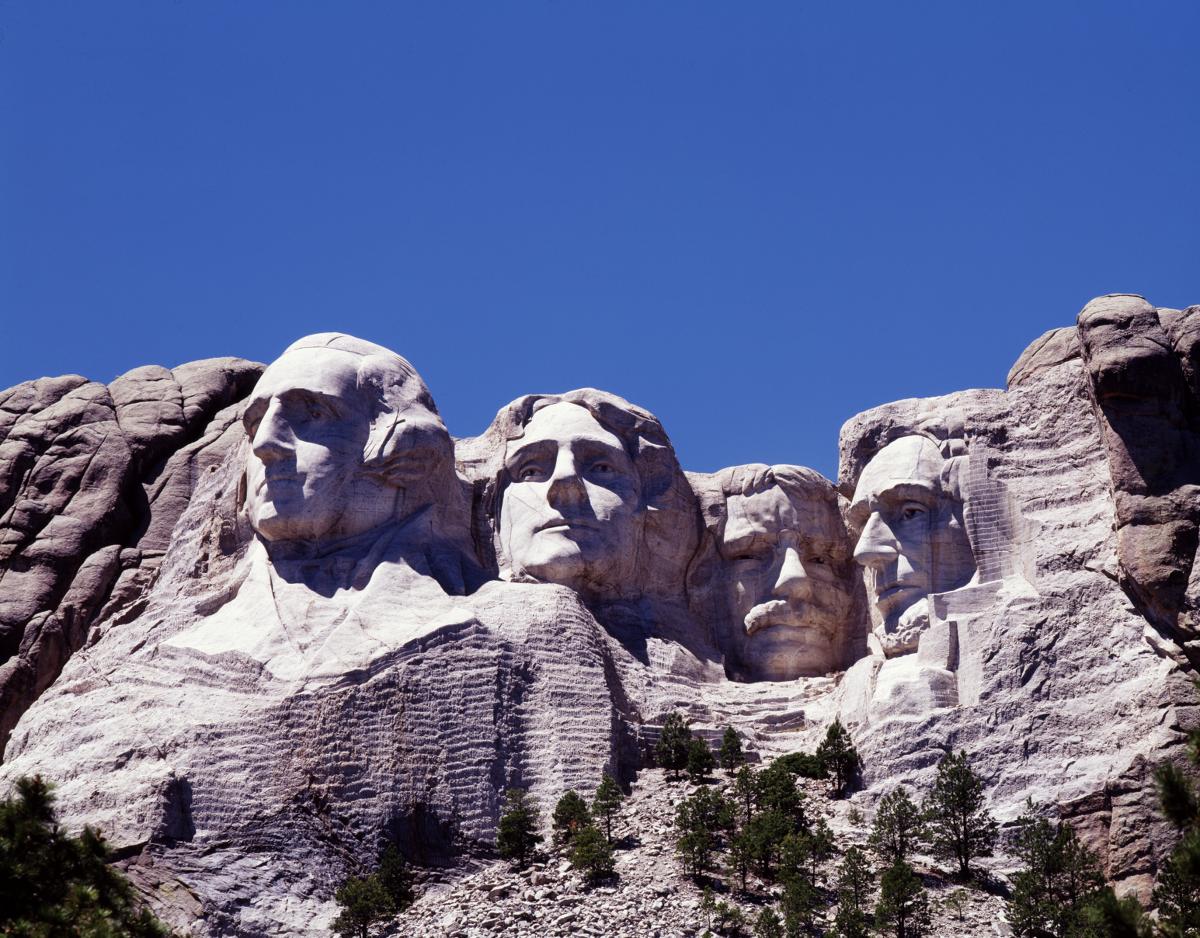
Just southwest of Rapid City, four presidents gaze out from a granite cliff. Mount Rushmore is the reason millions of travelers pass through Rapid City each year, and its creation is one of the most ambitious construction stories in American history.
A South Dakota tourism idea
The seed of Mount Rushmore came not from a sculptor but from a promoter. In 1923, South Dakota state historian Doane Robinson proposed carving giant figures into the Black Hills to draw tourists to the state. His original idea was to sculpt Western heroes into the granite spires known as the Needles.
The sculptor he recruited, Gutzon Borglum, had bigger ideas. Borglum rejected the Needles as too fragile and the Western-heroes theme as too regional. Instead he chose a broad, south-facing granite face, Mount Rushmore, and a national subject: four presidents representing the birth, growth, development, and preservation of the United States. As with the founding of Rapid City, the project was, at its heart, about putting the Black Hills on the map.
Four presidents
The faces honor George Washington, Thomas Jefferson, Abraham Lincoln, and Theodore Roosevelt. Work began in 1927, and carving continued, on and off as funding allowed, for fourteen years.
It is worth remembering that this was all happening on land sacred to the Lakota. The deeper story of He Sapa and the Black Hills is inseparable from the mountain that was reshaped into a national monument.
Dynamite, drills, and daring
Carving a mountain is mostly an exercise in removing rock, and the great majority of the stone on Rushmore was blasted away with dynamite. Skilled powdermen set charges precise enough to leave just inches of granite over the final surface. Crews then used jackhammers and a technique called “honeycombing” to bring the rock down to the finished face, which was smoothed by hand.
Hundreds of workers, roughly 400 over the life of the project, climbed the cliff in harnesses, dangling over the valley as they drilled. No one died during the entire construction.
An unfinished masterpiece
Borglum originally envisioned the presidents carved down to the waist, along with a grand “Hall of Records” cut into the mountain to hold America’s founding documents. It was not to be. Gutzon Borglum died in March 1941, and his son Lincoln Borglum oversaw the final months of work. With funding running short and the country turning toward World War II, the project ended in October 1941 with the faces, each about 60 feet tall, essentially as we see them today.
Why it matters to Rapid City
Mount Rushmore transformed Rapid City’s destiny. The city was already the Gateway to the Black Hills, but the memorial turned a steady stream of visitors into a flood. Hotels like the Hotel Alex Johnson, attractions like Dinosaur Park, and the city’s tourism economy grew up alongside the mountain.
Rushmore is the anchor of Black Hills tourism, and Rapid City remains its front door.